For companies operating private fleets, the pressure has never been greater. Rising costs, driver shortages, increasing compliance requirements, and the constant need for service reliability are forcing many businesses to rethink how they manage transportation.
That’s why more organizations are turning to Dedicated Contract Carriage (DCC)—a solution that delivers the control of a private fleet without the operational burden.
But not all dedicated providers are created equal. The difference comes down to partnership and the ability to deliver consistently, day in and day out.
IFTA and IRP compliance are unavoidable realities of running a fleet. But managing them internally? That’s optional.
And for many fleets, it’s becoming increasingly unsustainable.
Between tracking miles across jurisdictions, maintaining fuel documentation, preparing for audits and navigating state-by-state nuances, compliance has evolved into a cumbersome administrative function rather than a simple back-office task.
The question isn’t whether you can handle it internally.
It’s whether you should.
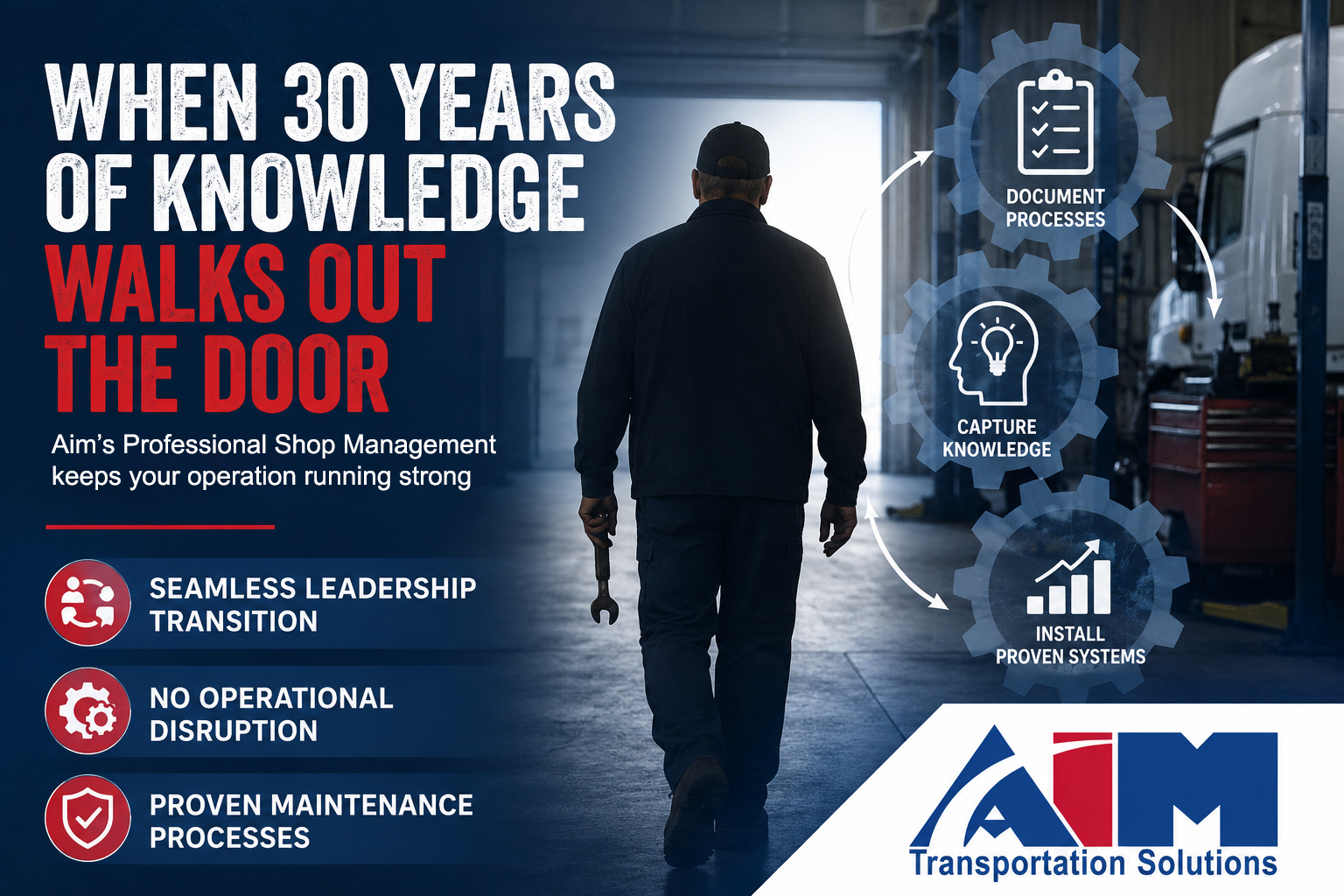
The diesel technician shortage continues to challenge fleet operators across the U.S., forcing companies to rethink not only how they attract and retain talent, but also how they structure their maintenance operations.
Industry leaders say the issue is no longer just about filling open roles—it’s about building sustainable systems that can withstand ongoing labor market volatility.
Across the transportation industry, one workforce challenge continues to dominate conversations in fleet management meetings and maintenance shops alike: the diesel technician shortage.
For companies that operate their own maintenance facilities, the impact is real. Open technician positions slow repairs, increase downtime and place additional strain on the people already in the shop. Even fleets with strong recruiting programs are finding that simply hiring more technicians isn’t always enough to keep pace with demand.
The only people who like winter are the ones who don’t have to drive in it.
For them, winter begins with the first snowflake or when pumpkin spice turns to peppermint. In transportation, winter starts when the jack-o’-lanterns rot — and it doesn’t end until the Easter Bunny shows up.
Few industries deal with winter the way we do. While others can work from home or use PTO during severe weather, our industry doesn’t stop. Drivers, technicians and support staff still have to report, because freight still has to move.
Winter isn’t optional for us.
What You’ll Learn:
Practical ways to generate more qualified applicants
How to compete on culture — not just compensation
Retention strategies that drive long-term loyalty
Maintenance alternatives that remove the burdens altogether
Event Details:
📅 Date: Thursday, March 5
🕒 Time: 11:00 AM (EST)
⏱ Duration: 1 hour
💻 Virtual (Teams)
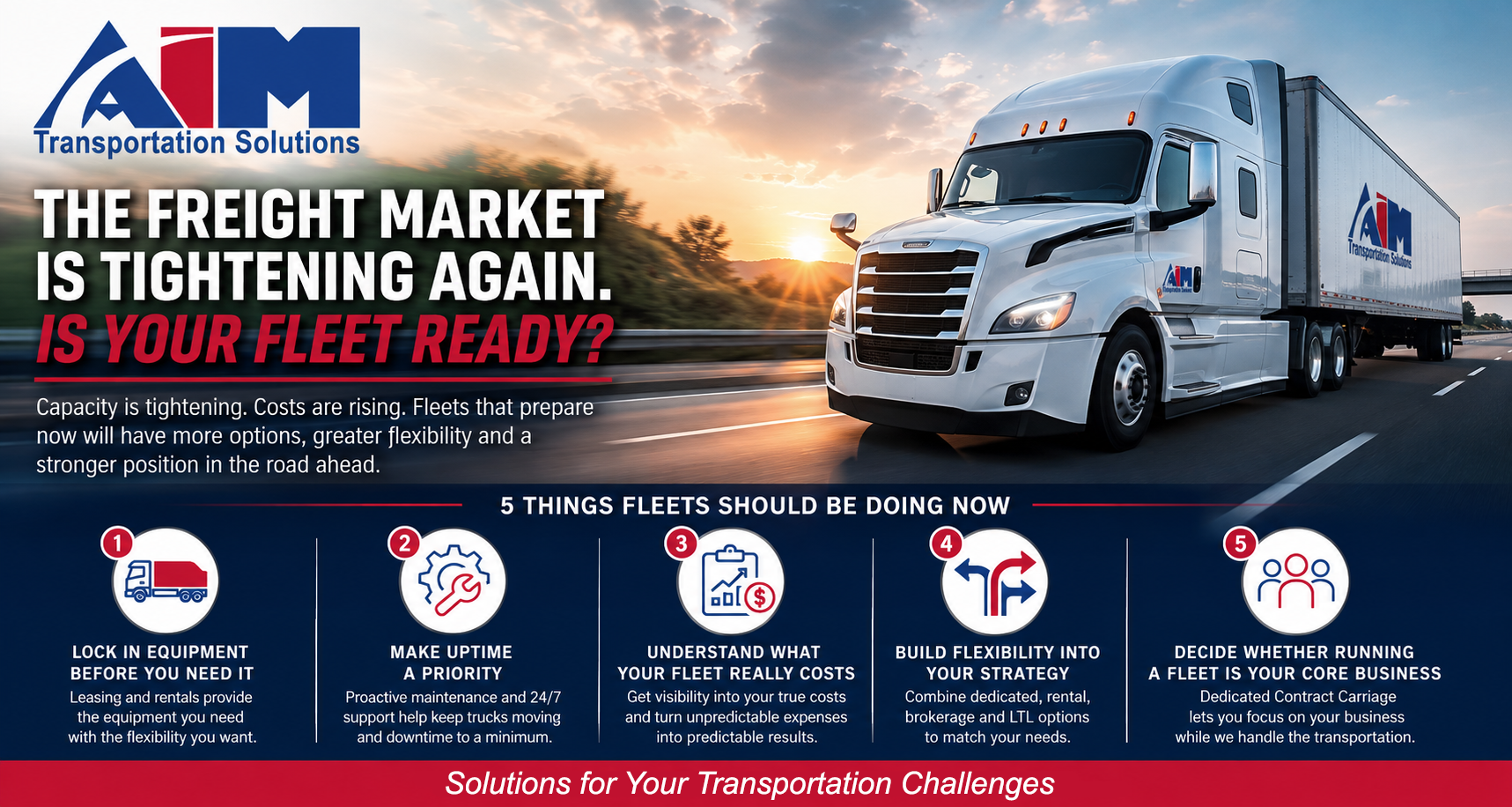
The truckload market is sending a clear signal: capacity is tightening, and spot rates are trending up rapidly.
According to the latest data from DAT, national spot truckload rates have climbed back into the mid-$2 per mile range, with some equipment types and regions seeing even stronger pricing. At the same time, flatbed load-to-truck ratios (LTR) have surged to levels that indicate a very tight freight environment.
For businesses relying heavily on the spot market, that combination can create volatility, higher costs and operational headaches. For those with a dedicated contract carriage strategy in place, it can mean stability and control while others scramble.
Aim Transportation Solutions has officially acquired Fleetmaster Leasing Corporation, a Columbus, Ohio-based truck leasing and rental company, marking another significant step in Aim’s continued expansion across Central Ohio. The acquisition follows the opening of Aim’s second Columbus location last year and further strengthens the company’s footprint in one of Ohio’s most active transportation markets.
For more than three years, Bob Hite has been an important part of the Aim family, driving routes out of Vienna, OH. However, Bob has been keeping one of Aim’s valued dedicated contract carriage customers, Millwood, Inc., moving for over two decades, bringing experience, reliability, and professionalism to every mile. When Aim partnered with Millwood three years ago, Bob was extremely grateful that, as he was welcomed into the Aim family, his seniority and start date with Millwood were recognized. “I really appreciate that,” he said. “It means a lot to me that they recognized my time and experience.”
Improving fleet safety isn’t about reacting after incidents happen — it’s about understanding where risk lives and addressing it before it turns into a violation, an accident, or downtime.
That’s the purpose behind Aim Transportation Solutions’ Safety Bulletin Roundup, a deep dive into the most common safety, compliance, and equipment issues affecting commercial fleets today. Led by John “Safety John” Rugarber, Aim’s Regional Safety Manager with more than two decades of industry experience, the session expands on topics regularly featured in Aim’s weekly Safety Bulletin and provides real-world context fleet operators can apply immediately.